Choosing a Three Phase Induction Motor is not just a matter of matching horsepower. The right choice depends on the load, supply, operating hours, starting method, and installation environment. A pump in a clean plant room faces different demands from a conveyor starting under load. Small mismatches can mean excess energy use, unwanted trips, or premature wear.
The stakes are significant. The International Energy Agency’s Electric Motor Systems Annex has estimated that motor-driven systems use about 45% of global electricity (IEA, 2011). In the United States, the Department of Energy’s motor-systems guidance puts their share at roughly 54% of manufacturing electricity. These figures make efficiency more than a nameplate detail. They also explain why engineers compare rated output, efficiency class, speed, torque, and duty cycle before specifying a motor.
Details matter. Check the voltage and frequency against the site supply, then confirm the required enclosure and cooling method. Consider how often the motor starts, whether a variable-frequency drive is planned, and how the driven equipment behaves at startup. IEC 60034 provides internationally recognized requirements and test methods for rotating electrical machines; its relevant parts can help verify ratings and performance claims. Still, a standard cannot replace an application review. A practical selection should use the equipment manufacturer’s load data and the motor’s actual operating profile. That step is easy to overlook—and sometimes the available data are imperfect. This guide outlines the key checks for choosing a reliable, efficient motor without treating a single specification as the whole answer.
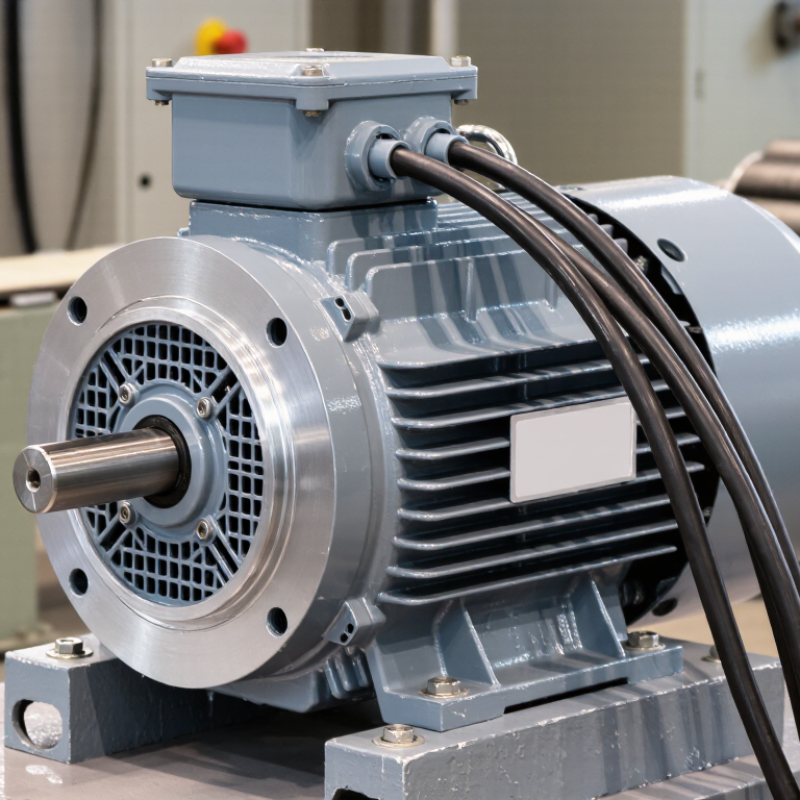
Define the Load, Duty Cycle, and Required Motor Output in kW
How to Choose a Three Phase Induction Motor?
Start by defining the machine’s real load, not just its nameplate rating. A conveyor carrying steady boxes behaves differently from a crusher handling sudden, heavy material. Record the required speed, torque, and any peak load during startup or operation. Motor output in kilowatts describes mechanical power at the shaft; it is not the same as electrical input. Check the driven equipment’s operating data, and note changes caused by temperature, friction, or product weight.
Next, describe the duty cycle. Will the motor run continuously, start and stop often, or operate for short bursts? Record operating hours, starts per hour, and the time spent near peak load. Then determine the required output in kW from the load and its operating conditions. A motor selected only for average demand may struggle during repeated peaks. Yet choosing a much larger unit can also reduce efficiency under light loads. A neat spreadsheet can still miss a brief but important overload, so verify assumptions with measured or supplier-provided equipment data.
Tips: Keep a simple load log for a normal production shift. Include startup behavior and unusual batches. If the figures are estimates, label them clearly; that uncertainty deserves review before final selection.
Match Rated Voltage and Frequency to the Supply: 50 or 60 Hz
Before selecting a three-phase induction motor, compare its nameplate voltage and frequency with the actual supply. A 400 V, 50 Hz motor is not automatically a suitable replacement for a 460 V, 60 Hz unit. Frequency changes synchronous speed: a four-pole motor runs at 1,500 rpm at 50 Hz and 1,800 rpm at 60 Hz, before slip. That affects driven equipment, such as a pump, fan, or conveyor. Small mismatch, big consequences.
Voltage and frequency also shape magnetic flux and available torque. A motor designed for 50 Hz may overheat if operated at 60 Hz without suitable voltage and load conditions. Check the manufacturer’s rating data and IEC 60034-1 operating-zone guidance, rather than relying on a voltage reading alone. The U.S. Department of Energy’s Improving Motor and Drive System Performance: A Sourcebook for Industry reports that motor-driven systems use about 68% of U.S. manufacturing electricity. That figure makes correct selection more than a nameplate exercise. In practice, supply voltage can sag during startup; measure it under load when possible. I would still verify the actual site frequency—assumptions are easy to make, and not always harmless.
How to Choose a Three-Phase Induction Motor: Match Supply Frequency
Synchronous speed depends on supply frequency and the number of motor poles: speed (RPM) = 120 × frequency (Hz) ÷ poles. A motor’s actual operating speed is slightly lower because of slip. Check that the motor’s rated frequency matches the supply; also verify its rated voltage before connection.
Select Pole Count: 2, 4, or 6 Poles Run at 3,000, 1,500, or 1,000 rpm at 50 Hz
At 50 Hz, a three-phase induction motor’s pole count sets its approximate synchronous speed: 2 poles give 3,000 rpm, 4 poles give 1,500 rpm, and 6 poles give 1,000 rpm. A simple speed chart can mislead, though. An induction motor normally runs slightly below synchronous speed because its rotor needs slip to produce torque. The nameplate speed is therefore more useful than the pole count alone when matching a motor to a machine.
Choose speed around the driven equipment, not just the motor. A two-pole motor suits applications needing faster rotation, such as some pumps or fans. Four-pole motors are common where moderate speed and practical balance matter. Six-pole motors turn more slowly and can reduce the need for speed reduction in certain conveyors or mixers. Check the load’s starting torque, operating range, and gearbox ratio before deciding. Small details count. A pump may tolerate a speed change differently from a loaded conveyor. If the application needs frequent speed adjustment, ask a qualified motor specialist whether a suitable drive and motor combination can meet the duty. The right pole count is a useful starting point, not the whole selection.
How to Choose a Three-Phase Induction Motor? Select Pole Count: 2, 4, or 6 Poles at 50 Hz
| Pole Count |
Synchronous Speed at 50 Hz |
Typical Full-Load Speed |
Typical Speed and Torque Characteristics |
Common Applications |
When to Consider This Option |
| 2 poles |
3,000 rpm |
Approximately 2,850–2,970 rpm |
Highest speed of the three options. Often provides lower torque per unit of power than a slower motor of the same rating. |
Fans, pumps, compressors, and other equipment designed for high-speed operation. |
Choose when the driven equipment requires high speed and can operate without substantial speed reduction. |
| 4 poles |
1,500 rpm |
Approximately 1,420–1,485 rpm |
Medium speed, commonly used for general-purpose industrial drives. Offers a practical balance of speed and torque. |
Conveyors, pumps, machine tools, mixers, and general-purpose machinery. |
Consider as a versatile starting point when the required operating speed is near 1,500 rpm. |
| 6 poles |
1,000 rpm |
Approximately 930–990 rpm |
Lower speed than 2- and 4-pole motors. For the same output power, it generally delivers more shaft torque at rated speed. |
Slow-speed mixers, certain pumps, conveyors, and equipment requiring higher torque at lower speed. |
Consider when the load needs a lower direct-drive speed or when reducing gearbox speed is desirable. |
Note: Synchronous speed is calculated as 120 × frequency ÷ pole count. An induction motor’s actual operating speed is lower because of slip; full-load speed varies with motor design, load, and rated specifications. Check the motor nameplate and the driven equipment’s requirements before selection.
Compare Efficiency Classes IE2–IE4 under IEC 60034-30-1
Under IEC 60034-30-1, IE2, IE3, and IE4 denote progressively higher motor-efficiency classes. The exact minimum depends on rated output, pole count, and supply frequency, so compare motors with matching specifications. Do not rely on an efficiency label alone. Check the test basis and declared rating; IEC 60034-2-1 specifies methods for determining motor losses and efficiency. The International Energy Agency’s 2011 report, Energy-Efficiency Policy Opportunities for Electric Motor-Driven Systems, estimated that these systems used about 46% of global electricity. Small gains can matter at scale.
For a real choice, record operating hours and actual shaft load, not just the nameplate rating. Estimate annual energy use as shaft power divided by efficiency, multiplied by running hours. Then compare the energy-cost difference with any purchase-price premium. IE4 may be worthwhile for a heavily used motor, but not automatically for a lightly loaded unit that runs occasionally. Details matter. Check starting torque, enclosure, ambient temperature, and whether a variable-speed drive will change the operating profile. I would be cautious about assuming full-load catalogue efficiency represents a fluctuating plant load; that assumption can make payback look better than it is.
Check Starting Torque, Enclosure, and IP Protection under IEC 60034-5
When choosing a three-phase induction motor, match its starting torque to the load, not just its rated power.
A loaded conveyor may need high breakaway torque; a fan usually starts more easily. Compare the motor’s torque-speed curve with the machine’s load curve, and check the supply voltage and starting method. A soft starter can reduce starting current, but it may also limit available torque. It may fail.
The U.S. Department of Energy’s 2002 United States Industrial Electric Motor Systems Market Opportunities Assessment estimated that motor-driven systems used 68% of industrial electricity.
That historical figure is a reminder: sizing and operating conditions matter.
Choose the enclosure for the actual environment.
IEC 60034-5 defines IP protection ratings: IP55 provides dust protection and protection against water jets, while IP66 is dust-tight and tested against powerful water jets. Neither rating guarantees resistance to corrosive chemicals, salt, or persistent condensation. Check those risks separately. A washdown area may need more than a higher IP number. Look for the manufacturer’s test documentation and confirm the rating fits the installation, cable entries, and maintenance plan. Dust on cooling fins is easy to overlook, yet it can raise operating temperatures and shorten insulation life. I would verify the site conditions before settling on a standard enclosure.
Conclusion
Choosing a Three Phase Induction Motor begins with understanding the driven load, its operating cycle, and the mechanical output required in kilowatts. Consider whether the motor will run continuously or intermittently, and account for starting and operating demands when determining its capacity. The motor’s rated voltage and frequency must also match the available supply, typically 50 or 60 Hz, to support reliable operation.
Next, select a pole count that suits the required speed: at 50 Hz, two-, four-, and six-pole motors run at approximately 3,000, 1,500, and 1,000 rpm, respectively. Compare IE2–IE4 efficiency classes in line with IEC 60034-30-1, weighing energy use against operating needs. Finally, check that starting torque is appropriate for the load, and choose an enclosure and IP protection rating under IEC 60034-5 that fit the installation environment.
 Sunvim Motor
