
Sunvim Motor Sunvim Motor

Why Choose Asynchronous Motors for Your Industry Needs?

Time:2026-06-04 Author:Henry
0%

In today's industrial landscape, selecting the right motor is crucial for efficiency and performance. The Asynchronous Motor stands out for its versatility and reliability. This type of motor operates without a direct electrical connection, making it simple and efficient. Many industries benefit from its ability to handle varying loads without compromising on speed.

However, not all applications require the same motor. There are factors to consider, like power supply and load characteristics. The Asynchronous Motor is designed to be robust, yet it may not be the best fit for every situation. Understanding specific needs is vital before making a choice.

An Asynchronous Motor can reduce maintenance costs, which is an appealing aspect for many manufacturers. Its construction allows for durability, but this also requires understanding potential challenges in specific environments. Despite its many advantages, careful evaluation is essential to ensure it aligns with industry requirements.
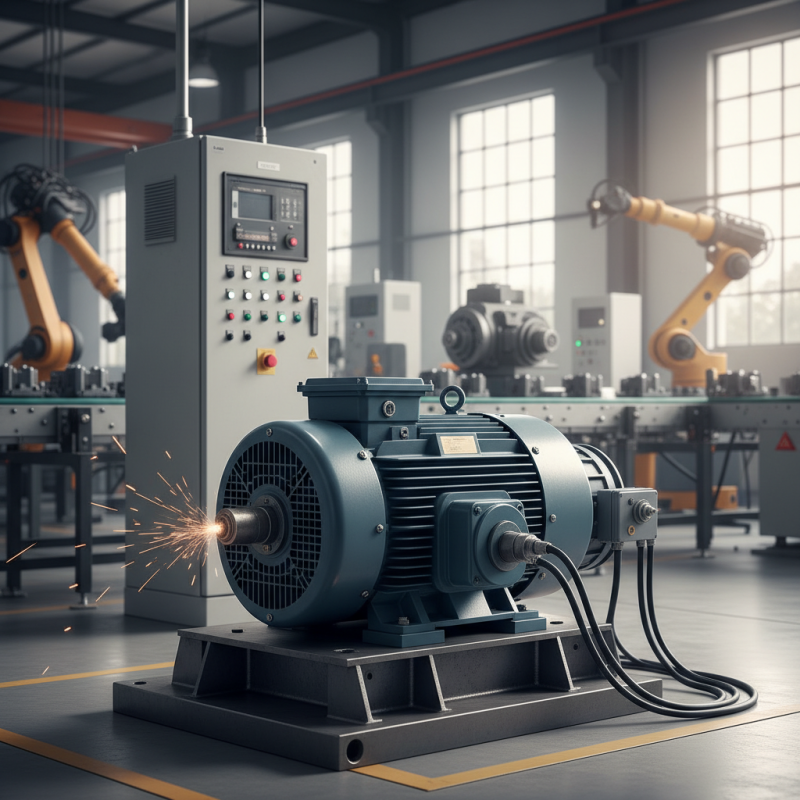
Why Choose Asynchronous Motors for Your Industry Needs?

Advantages of Asynchronous Motors in Industrial Applications

Asynchronous motors have gained significant traction in various industries due to their numerous advantages. One major benefit is their efficiency. Industry reports indicate that these motors can achieve an efficiency rating of up to 95%. This high efficiency translates to lower energy costs, making them a preferred choice for many applications. With energy prices constantly fluctuating, this cost-effectiveness becomes crucial for businesses aiming to reduce operational expenses.

Another notable advantage is their maintenance requirements. Asynchronous motors are generally robust and require less maintenance compared to other motor types. According to the International Electrotechnical Commission, the average lifespan of an asynchronous motor can exceed 20 years under proper conditions. However, some businesses overlook this aspect, leading to unplanned downtime and costlier repairs. Prioritizing regular maintenance can help mitigate these risks.

Flexibility is another strong point. These motors can operate efficiently under varying load conditions. This adaptability makes them suitable for a range of applications, from conveyors to pumps. Yet, it's worth noting that their performance can be less optimal in specific situations. Understanding the application requirements is essential for industry leaders to make informed decisions. By recognizing both the strengths and weaknesses of asynchronous motors, businesses can better tailor their operations and improve overall efficiency.

Why Choose Asynchronous Motors for Your Industry Needs? - Advantages of Asynchronous Motors in Industrial Applications

Aspect Description Advantages Applications
Efficiency Asynchronous motors offer high efficiency, particularly at full-load conditions. Reduced energy costs and improved operational efficiency. Manufacturing, HVAC systems.
Maintenance Asynchronous motors require less maintenance compared to synchronous motors. Lower maintenance costs and downtime. Pumps, conveyors.
Cost Generally, asynchronous motors are cheaper to manufacture and purchase. Budget-friendly option for various applications. Fans, compressors.
Performance They perform well across a range of loads and conditions. Stable operation and wide load adaptability. Automated machinery, industrial tools.
Versatility Suitable for various industrial setups and environments. Wide range of applications in different sectors. Textile mills, mining operations.

Key Features of Asynchronous Motors Compared to Other Types

Asynchronous motors are gaining popularity in various industries due to their unique features. They operate without a direct electrical connection between the rotor and the stator. Instead, they induce current through electromagnetic induction. This design reduces maintenance needs and improves reliability. Many industries prefer this motor type for its efficiency in converting electrical energy to mechanical power.


One key feature of asynchronous motors is their robustness. They can withstand harsh environments and work effectively in extreme temperatures. This durability makes them suitable for heavy-duty applications. Unlike synchronous motors, asynchronous motors can start directly connected to the power supply. This allows for simpler installation and reduces initial setup complications. However, this simplicity can also pose challenges in specific applications where precise speed control is required.


Asynchronous motors tend to have a lower power factor than synchronous motors, making them less efficient under certain conditions. This characteristic requires careful consideration during system design. Engineers must evaluate if the trade-off between efficiency and simplicity aligns with operational needs. In some situations, the need for improved efficiency may suggest exploring alternative motor options or incorporating correction methods.

Energy Efficiency and Cost Savings with Asynchronous Motors

Asynchronous motors are becoming increasingly popular in various industries. Their energy efficiency is a significant advantage. These motors can operate at high efficiency levels, which leads to reduced electricity consumption. This characteristic not only conserves energy but also helps in lowering utility bills.

Many industries see a noticeable decrease in operational costs after switching to asynchronous motors. The initial investment may be higher, but the returns through energy savings can be substantial. Organizations often report lower maintenance needs as well. Fewer moving parts mean less wear and tear over time, enhancing reliability.

However, it is essential to consider the exact requirements of your application. Not every scenario may benefit equally from asynchronous motors. For some high-torque or precise speed applications, alternative solutions could be better. Analyzing the specific needs can ensure optimal decision-making.

Common Industries Utilizing Asynchronous Motors Today

Asynchronous motors are widely used across various industries today. Their ability to run efficiently under different loads makes them ideal for many applications. Manufacturing, food processing, and HVAC systems are among the sectors reaping these benefits.

In manufacturing, asynchronous motors are favored for their simplicity and durability. They perform well in conveyor systems and machine tools. The constant speed delivery helps enhance production rates. However, maintenance is sometimes overlooked. Regular checks can prevent unexpected failures.

The food processing industry also relies on asynchronous motors. They power mixers, pumps, and packaging machines. Reliability is vital here due to safety standards. Yet, energy efficiency needs careful consideration. Investing in energy-saving solutions can reduce long-term costs.

Tips: Always evaluate the specific requirements of your applications before choosing a motor. Consider potential energy savings as well. A well-informed choice can boost efficiency and extend equipment life.

Future Trends in Asynchronous Motor Technology and Innovation

Asynchronous motors are becoming essential in various industries due to their efficiency and adaptability. Future trends show a significant shift towards smarter motor technologies. According to a recent industry report, the global market for electric motors is projected to reach $175 billion by 2027, with asynchronous motors leading the innovation charge.

Many industries are prioritizing energy-efficient solutions. Asynchronous motors consume less power and have a longer lifespan, making them cost-effective. Advanced materials and digital technologies are enhancing their performance. Researchers highlight the potential of IoT integration, enabling real-time monitoring and predictive maintenance. However, this requires careful implementation and training.

Tips: Regularly assess your motor technology. Look for sensors that can provide data on performance metrics. Embrace innovations that improve efficiency, but be cautious of integration challenges. Continuous learning is key for harnessing these emerging technologies. Exploring these trends may yield substantial advantages. Consider what works best for your specific needs.

FAQS

: What are the main advantages of asynchronous motors?

: Asynchronous motors offer high efficiency, often up to 95%. This helps lower energy costs.

How durable are asynchronous motors?

They can last over 20 years with proper care. However, neglecting maintenance can lead to issues.

In which industries are asynchronous motors commonly used?

They are found in manufacturing, food processing, and HVAC systems. Their flexibility is a key benefit.

Why is regular maintenance important for these motors?

Regular checks prevent unexpected failures and costly repairs. It's an area often overlooked by businesses.

How do asynchronous motors adapt to varying loads?

They operate efficiently under different load conditions. But performance may drop in specialized situations.

What future trends are emerging in motor technology?

There’s a shift towards smarter technologies and IoT integration. This requires careful implementation and training.

Why should businesses consider energy efficiency in motor choices?

Investing in energy-saving solutions can cut long-term costs. It also boosts overall efficiency.

What role does technology play in enhancing motor performance?

Advanced materials and digital tech improve efficiency. Continuous learning is essential for adapting to innovations.

What should I assess when choosing a motor?

Evaluate specific application requirements and potential energy savings. Make informed decisions to extend equipment life.

Are there any challenges with adopting new motor technologies?

Integration can be complex, requiring extra attention and training. Businesses must weigh benefits against potential issues.

Conclusion

Asynchronous motors have become a crucial component in various industrial applications due to their numerous advantages. They offer significant energy efficiency and cost savings, making them an attractive choice for businesses looking to reduce operational expenses. Compared to other motor types, asynchronous motors are known for their robustness, reliability, and lower maintenance requirements, further enhancing their appeal in diverse industrial sectors.

Today, many industries, including manufacturing, mining, and textiles, extensively utilize asynchronous motors due to their versatility and adaptability. As technology progresses, we can expect continuous innovations in asynchronous motor design, leading to improved performance and increased efficiency. These trends indicate a promising future for asynchronous motors, solidifying their role as a preferred solution for modern industrial needs.

Henry

Henry

Henry is a dedicated marketing professional with a profound expertise in the company's offerings. With years of experience in the industry, he possesses an impressive understanding of the market dynamics and consumer behaviors that drive success. Henry is committed to sharing his insights through......