High Voltage Motors (HVMs) play a crucial role in various industries. They are essential for applications requiring significant power, like mining and manufacturing. According to a report by Research and Markets, the global high voltage motor market was valued at over $8 billion in 2020 and is projected to grow at a CAGR of 4.7% through 2025. This growth primarily stems from the increasing demand for energy-efficient motors.
Dr. Emily Roberts, a leading expert in electrical engineering, emphasizes the importance of HVMs: “High Voltage Motors are the backbone of industrial power systems.” Her insights underline how these motors are vital for reliable and efficient operations. Yet, the technology isn't without challenges. Issues like maintenance and reliability must be carefully considered.
Despite advancements, many industries struggle with integrating HVMs into their existing systems. This reflects a need for continuous improvement and adaptation. Ensuring optimal performance while managing reliability is key for future growth. High Voltage Motors remain a complex but rewarding area of focus for engineers and industry professionals alike.
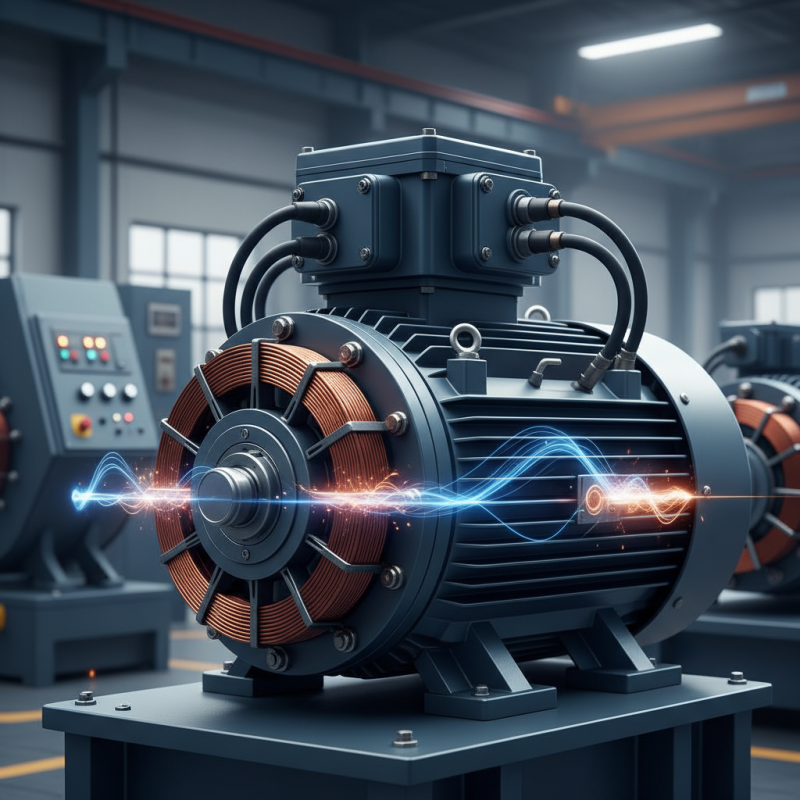
Definition and Characteristics of High Voltage Motors
High voltage motors are essential in various industrial applications. They typically operate at voltages exceeding 1,000 volts. This distinguishes them from standard motors, which run at lower voltages. The main application areas include mining, manufacturing, and large-scale pumping systems. High voltage motors contribute to efficiency by minimizing energy losses over long distances.
These motors are characterized by their robust design. They often feature larger stators and rotors compared to standard motors. This design allows them to handle demands in heavy-duty environments. Cooling systems are critical, as they prevent overheating during prolonged operation. Many high voltage motors use squirrel cage rotor designs, which enhance their reliability. However, users must consider maintenance needs.
Operating high voltage motors can be challenging. Proper installation and configuration are vital for safety and performance. Users may face issues like incorrect voltage supply or improper grounding. Regular inspections are necessary to detect potential problems before they escalate. Understanding these nuances is crucial for effective use, ensuring both longevity and safety in their applications.
Principles of Operation of High Voltage Motors
High Voltage Motors (HVMs) are critical in various industrial applications. They operate on the principle of electromagnetic induction. When electric current flows through coils, it creates a magnetic field. This field interacts with the rotor, producing motion. The efficiency of these motors often exceeds 95%. Studies show that efficient HVMs can reduce energy costs by up to 30%.
The design of High Voltage Motors facilitates their function in harsh environments. For example, insulation systems are crucial for ensuring reliability. They protect against voltage spikes and overheating. Additionally, cooler operating temperatures can extend the life of the motor. However, the complexity of their design can lead to challenges. Maintenance is essential to prevent unexpected failures. An estimated 10% of motor failures occur due to poor maintenance practices, highlighting the need for regular checks.
Moreover, high voltage systems require specialized safety measures. For instance, proper grounding and protection devices ensure safe operation. Awareness of these safety protocols is vital for operators. Despite advancements, human error remains a concern in handling high voltage equipment. Training and continuous education can help mitigate risks. Balancing operational efficiency and safety is key in maximizing the performance of High Voltage Motors.
Applications of High Voltage Motors in Industry
High voltage motors play a crucial role in various industrial applications. These motors operate at voltages above 1,000 volts, enabling them to power large equipment effectively. Industries such as mining, oil and gas, and manufacturing rely heavily on high voltage motors to drive their operations. For instance, in mining, these motors are used to power crushers and conveyor systems, improving efficiency significantly.
The benefits of high voltage motors extend beyond power output. Their design often allows for better energy efficiency, resulting in lower operational costs. Additionally, they usually require less maintenance compared to lower voltage counterparts. This reliability is essential for processes that cannot afford downtime.
However, the complexity of these motors can lead to challenges in installation and maintenance. They require skilled professionals who are trained in high voltage systems.
Despite their advantages, high voltage motors can pose safety risks. Mishandling can result in serious accidents. Proper training and safety protocols are vital in mitigating these risks.
Furthermore, industries must continuously evaluate their needs and equipment performance to ensure optimal functioning. Balancing the benefits with the risks is critical for ensuring sustainable operations.
Advantages and Disadvantages of High Voltage Motors
High voltage motors are commonly used in industrial applications. They provide significant power output while maintaining efficiency. However, there are notable advantages and disadvantages to consider.
One major advantage is their energy efficiency. High voltage motors operate at higher efficiencies than their low voltage counterparts. This can lead to significant energy savings in large operations. They are also designed to handle high loads, making them suitable for heavy machinery and equipment. Additionally, the ability to transmit power over long distances reduces the need for extensive wiring systems, simplifying installations.
On the downside, high voltage motors come with challenges. Their installation can be complex and costly. Specialized knowledge is often required for setup and maintenance. Safety is another concern. Operating at high voltages poses risks of electric shock or equipment damage. Moreover, repairs may take longer due to the specialized parts and expertise needed. These factors can lead operators to question the cost-effectiveness of these motors in some situations.
What is a High Voltage Motor and How Does It Work? - Advantages and Disadvantages of High Voltage Motors
| Dimension |
Details |
| Voltage Range |
Above 1000 V (usually 3kV to 13.8kV) |
| Common Applications |
Heavy Industries, Pumps, Fans, Compressors |
| Efficiency |
High efficiency (up to 96%) |
| Size |
Larger than low voltage motors due to insulation requirements |
| Advantages |
Reduced current for high power, lower energy losses, suitable for long distances |
| Disadvantages |
Higher initial cost, complex control systems, safety concerns |
| Maintenance |
Requires specialized skills, periodic checks are essential |
| Cooling Methods |
Air-cooled and water-cooled options available |
Maintenance and Safety Considerations for High Voltage Motors
High voltage motors are critical in various industries, but they also come with significant maintenance and safety responsibilities. Regular maintenance practices can reduce the risk of failures. According to the National Electrical Manufacturers Association (NEMA), approximately 25% of motor failures are due to inadequate maintenance. This suggests that strict adherence to maintenance schedules is essential.
Safety is paramount when dealing with high voltage equipment. Both electrical and mechanical hazards exist. The Occupational Safety and Health Administration (OSHA) highlights that proper training is crucial. A lack of understanding can lead to severe accidents. Maintenance personnel must be aware of lockout/tagout procedures and wear appropriate personal protective equipment.
Visual inspections should be routine. Checking for signs of wear, overheating, or abnormal noises can prevent larger issues. Vibration analysis can reveal hidden problems. Industry reports indicate that predictive maintenance can extend motor life by up to 30%. However, many facilities still rely on reactive maintenance, which often costs more in the long run. Balancing the workload and maintaining high vigilance can be challenging but is necessary for safe operations.
FAQS
: High Voltage Motors use electromagnetic induction. Electric current in coils creates a magnetic field that interacts with the rotor.
Their efficiency often exceeds 95%. This can lead to energy cost reductions of up to 30%.
They offer better energy efficiency and lower operational costs. They also require less maintenance compared to lower voltage motors.
Their complexity can lead to installation and maintenance issues. Skilled professionals are needed for proper handling.
Poor maintenance accounts for about 10% of motor failures. Regular checks are essential to prevent unexpected breakdowns.
Proper grounding and protective devices ensure safe operation. Awareness of safety protocols is crucial for operators.
Yes, they are vital in mining, oil and gas, and manufacturing. For example, they power crushers and conveyor systems.
Training and continuous education help minimize human error. It’s crucial for safe handling of high voltage equipment.
Balancing the benefits with safety risks is critical. Continuous evaluation of equipment performance is necessary.
Mishandling can lead to serious accidents. Proper training can help mitigate these risks.
Conclusion
High Voltage Motors are electric motors designed to operate at voltages typically above 1,000 volts, characterized by their robust construction and ability to handle significant power outputs. These motors function on the principles of electromagnetic induction, converting electrical energy into mechanical energy to drive various industrial applications. Their primary use spans across sectors such as manufacturing, mining, and transportation, where they power heavy machinery and equipment.
While High Voltage Motors offer numerous advantages, including efficiency and reduced energy losses, they also come with certain disadvantages, such as increased installation costs and maintenance challenges. Proper maintenance and adherence to safety standards are essential to ensure their optimal performance and longevity. Understanding these aspects is crucial for industries looking to leverage the benefits of High Voltage Motors effectively.
 Sunvim Motor
