
Sunvim Motor
Electric motors quietly drive modern life, from factory conveyors and elevator shafts to pumps beneath city streets. The International Energy Agency (IEA) estimates that motor-driven systems consume nearly half of global electricity. That figure makes manufacturer selection an energy decision, not merely a purchasing decision.
This guide examines 10 leading Electric Motor manufacturers worldwide. It considers engineering depth, efficiency performance, product range, global service, and proven industrial experience. The review also looks at induction motors, permanent-magnet designs, servo systems, and motors built for hazardous or demanding environments. Real-world details matter: a motor running continuously beside a hot production line faces different challenges from one inside a clean-room robot.
The U.S. Department of Energy has repeatedly highlighted motor-system efficiency as a major industrial savings opportunity. Small improvements can compound across thousands of operating hours. Still, efficiency labels alone do not tell the whole story. Installation quality, load matching, maintenance, and variable-speed control can change actual results.
No ranking is perfectly neutral.
Manufacturers serve different applications and regions. A company strong in marine propulsion may not lead in compact automation motors. Therefore, this selection balances technical reputation with documented reliability, certification practices, innovation, and after-sales support. Information is compared against established industry research, including IEA energy-efficiency findings and international motor-efficiency standards such as IEC 60034-30-1.
Some choices may remain debatable. That is useful. A thoughtful buyer should question ratings, request test data, and verify lifecycle costs before signing a contract.
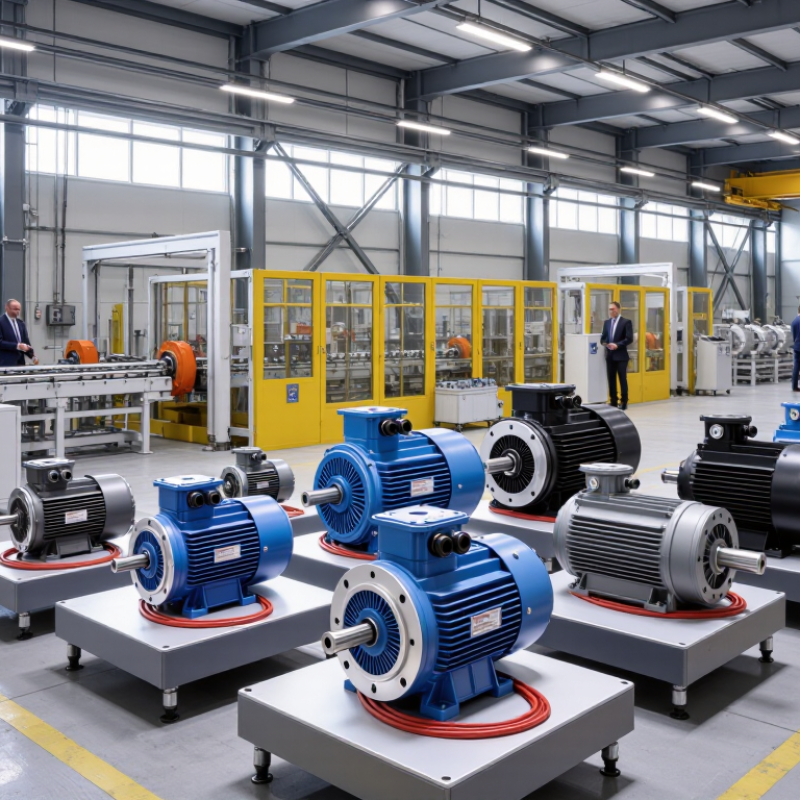
Global electric motor manufacturing covers a broad network of factories, engineering centers, suppliers, and service partners. Manufacturers produce induction, synchronous, DC, traction, and specialized motors. Their products support pumps, conveyors, compressors, robotics, elevators, vehicles, and renewable energy systems. Demand differs by region. Asia supports large-scale production, while Europe and North America emphasize efficiency, automation, and industrial upgrades. Emerging markets are expanding through infrastructure and electrification projects.
Tips: Compare efficiency ratings, operating temperature, torque, insulation class, and service access. Check whether the motor suits the voltage, load profile, and installation environment. A low purchase price may create higher energy costs later. Ask for test records, maintenance guidance, and spare-part availability. Field experience matters.
Global competition now depends on more than motor output. Manufacturers must manage copper, steel, magnets, electronics, and shipping risks. Digital monitoring is also changing maintenance. Sensors can reveal vibration, overheating, and bearing wear before failure occurs. However, sensor data is not always reliable. Poor installation can produce misleading readings. Buyers should verify performance through recognized testing procedures and transparent technical documents. No ranking is perfect. A manufacturer with strong laboratory results may still offer weak local support. Practical reliability should be judged through documented testing, operating history, and responsive service.
A serious ranking begins with measurable performance, not advertising claims. The International Energy Agency estimates that electric motor systems consume about 45% of global electricity. Small efficiency gaps can therefore create large energy costs.
Evaluation should examine rated efficiency, partial-load performance, heat loss, vibration, and service life. Testing should follow recognized standards, including IEC 60034 efficiency classifications. Laboratory results matter, but factory conditions matter more.
Reliability needs evidence. Reviewers should compare failure rates, bearing durability, insulation quality, and protection against dust or moisture. The U.S. Department of Energy has reported that motor-driven equipment uses more than half of industrial electricity in American facilities.
That makes maintenance data commercially important. A strong manufacturer provides test certificates, repair guidance, spare-parts availability, and clear warranty terms. Vague claims weaken confidence.
Total cost deserves greater weight than purchase price. A motor that costs less may consume more electricity for years. Buyers should model annual operating hours, electricity tariffs, load patterns, and downtime risk.
Noise and starting current also affect real installations.
No scorecard is perfect. Supply-chain transparency remains difficult to verify.
Independent audits can be expensive. Still, transparent data is better than polished promises.
The best evaluation combines measured efficiency, field feedback, lifecycle cost, and technical support. Availability should be checked locally, not assumed.
Profiles of Ten Major Electric Motor Manufacturers Worldwide
A Japanese manufacturer is known for compact induction motors used in pumps and factory conveyors. Its strength is quiet operation, although some models require careful cooling checks. A German producer focuses on high-efficiency motors for automation lines and process equipment. Engineers often value its detailed documentation and precise tolerances. A United States manufacturer supplies large motors for compressors, water systems, and heavy industrial machinery. Its service network can matter as much as rated output.
An Italian company develops motors for elevators, fans, and packaging equipment. Flexible mounting options help installers working in tight spaces. A Swiss manufacturer emphasizes synchronous motors and advanced drive integration. These systems can reduce energy losses, but setup demands skilled technicians. A South Korean producer serves shipbuilding, robotics, and commercial infrastructure. A Chinese manufacturer offers broad production capacity and competitive designs for pumps and general machinery. An Indian producer combines industrial motors with repair-friendly construction. A French company specializes in motors for rail, energy, and demanding transport applications. A Nordic manufacturer is recognized for harsh-environment motors, including units exposed to cold, dust, or moisture.
Tips: Compare efficiency class, duty cycle, enclosure rating, insulation quality, and local support. Ask for test records, not only catalog claims. Check shaft dimensions and starting current before ordering. Real installations often reveal problems that specifications miss. I have found that noise, heat, and maintenance access deserve equal attention. A perfect motor on paper may still be inconvenient in a crowded plant.
IE3 minimum efficiency benchmarks for four-pole motors at selected rated power levels, based on IEC 60034-30-1 efficiency classification data.
The chart compares standardized IE3 efficiency levels across common motor power ratings. Efficiency generally increases with motor size, while actual performance may vary according to voltage, frequency, load, operating conditions, and motor design.
Choosing among the 10 best electric motor manufacturers requires more than comparing efficiency labels. Motor type must match the load, speed range, duty cycle, and maintenance environment. The International Energy Agency estimates that electric motor systems consume roughly half of global electricity. Small design differences therefore create large operating-cost impacts.
Induction motors remain practical for pumps, fans, compressors, and conveyors. They are durable, affordable, and easy to service. Permanent-magnet synchronous motors usually deliver higher efficiency and stronger torque at variable speeds. They suit robotics, electric vehicles, and compact industrial equipment. Switched-reluctance motors tolerate harsh conditions, but noise and control complexity remain concerns. According to IEC 60034-30-1, efficiency classes help compare motors, yet testing conditions may not represent a dusty factory floor.
Industrial buyers should examine inverter compatibility, thermal performance, bearing life, repair access, and spare-part availability. The U.S. Department of Energy reports that motor-driven equipment can represent more than half of industrial electricity use, making controls almost as important as the motor itself. A variable-frequency drive can reduce energy use in variable-torque applications, although poor commissioning may erase those gains. Manufacturer rankings can also mislead. A highly efficient motor may perform poorly when oversized, frequently overloaded, or paired with an unsuitable drive. Real selection needs measured operating data, not catalogue optimism.
A technology-led comparison of the ten most important electric-motor product categories commonly offered by leading global manufacturers. The table avoids company and brand names and focuses on verifiable engineering characteristics, efficiency behavior, control methods, and industrial use cases.
| Rank | Motor Technology | Operating Principle | Typical Power Range | Typical Speed-Control Method | Efficiency and Performance Profile | Main Advantages | Key Limitations | Common Industrial Applications | Relevant Standards or Selection Criteria |
|---|---|---|---|---|---|---|---|---|---|
| 1 | Permanent-Magnet Synchronous Motor PMSM |
Permanent magnets on the rotor create a synchronous rotating magnetic field without rotor excitation losses. | From fractional-kilowatt units to multi-megawatt industrial drives. | Variable-frequency drive with field-oriented control or other vector-control methods. | Very high efficiency, especially at partial load; high torque density and strong dynamic response. | Compact design, low rotor losses, high power factor, excellent controllability. | Permanent-magnet material cost; possible demagnetization risk under severe thermal or fault conditions. | Robotics, servo systems, compressors, elevators, pumps, electric traction, and high-efficiency production lines. | Efficiency class, thermal design, demagnetization margin, encoder requirements, duty cycle, and drive compatibility. |
| 2 | Squirrel-Cage Induction Motor ACIM |
A rotating stator field induces current in the short-circuited rotor bars, producing torque through electromagnetic induction. | Approximately 0.05 kW to several megawatts. | Direct-on-line starter, soft starter, or variable-frequency drive. | Reliable and efficient across a broad operating range; efficiency generally improves with larger frame size and higher efficiency class. | Robust construction, low maintenance, no brushes, broad global service capability, and comparatively low purchase cost. | Lower efficiency at light load than many permanent-magnet designs; starting current can be high without controlled starting. | Fans, pumps, conveyors, compressors, machine tools, material handling, and general-purpose industrial machinery. | IEC 60034-30-1 or equivalent efficiency classification, starting current, service factor, enclosure, insulation class, and duty rating. |
| 3 | Brushless DC Motor BLDC |
Electronic commutation replaces mechanical brushes while permanent magnets provide rotor excitation. | From a few watts to tens of kilowatts; larger versions are also available for specialized systems. | Electronic commutator using Hall sensors, encoders, sensorless control, or closed-loop vector control. | High efficiency and good speed range, with strong performance in intermittent and variable-speed operation. | Low maintenance, compact size, high starting torque, and precise electronic speed control. | Requires a controller; electromagnetic compatibility, acoustic noise, and control tuning require attention. | Cooling equipment, pumps, medical devices, automation, battery-powered equipment, drones, and light electric vehicles. | Controller-motor matching, commutation method, thermal limits, acoustic requirements, ingress protection, and duty cycle. |
| 4 | Switched Reluctance Motor SRM |
Torque is produced because the magnetically salient rotor moves toward the position of minimum magnetic reluctance. | From small actuators to high-power industrial drive systems. | Dedicated power converter with rotor-position-based phase switching. | High-temperature capability and wide constant-power speed range; efficiency depends strongly on control and magnetic design. | Simple rotor, no permanent magnets, no rotor windings, and strong fault tolerance potential. | Torque ripple, acoustic noise, converter complexity, and the need for specialized control algorithms. | Electric traction, pumps, compressors, high-speed drives, appliances, and harsh-environment machinery. | Torque-ripple limits, acoustic performance, converter topology, rotor-position sensing, thermal behavior, and fault tolerance. |
| 5 | Synchronous Reluctance Motor SynRM |
A rotor with directional magnetic reluctance aligns with the rotating stator field and operates synchronously. | Commonly used from several kilowatts to hundreds of kilowatts, with larger industrial systems available. | Variable-frequency drive using field-oriented control. | High efficiency and low rotor losses; performance is particularly attractive in pumps and fans with variable load. | No rotor magnets, reduced rotor heating, good overload capability, and improved efficiency over many conventional induction motors. | Lower power factor and torque density than some permanent-magnet alternatives; requires a suitable drive. | Pumps, fans, compressors, conveyors, mixers, and process-industry equipment. | Drive compatibility, power factor, efficiency class, rotor mechanical strength, acoustic noise, and load profile. |
| 6 | Servo Motor System AC Servo |
Usually a permanent-magnet synchronous motor operated in a closed-loop system for precise position, speed, and torque control. | From tens of watts to hundreds of kilowatts, depending on machine size and dynamic requirements. | High-bandwidth servo drive with encoder or resolver feedback. | Excellent dynamic response, positioning accuracy, repeatability, and overload performance. | Precise motion control, rapid acceleration, low-speed torque, and coordinated multi-axis operation. | Higher system cost, more commissioning effort, and greater sensitivity to feedback, cabling, and tuning quality. | Robotic arms, CNC machines, packaging, semiconductor equipment, printing, and automated assembly. | Position accuracy, repeatability, peak torque, feedback resolution, inertia matching, safety functions, and network protocol. |
| 7 | Single-Phase Capacitor Motor PSC / Capacitor-Start |
An auxiliary winding and capacitor create a phase shift that produces starting or running torque from a single-phase supply. | Typically fractional-kilowatt to several kilowatts. | Fixed-frequency supply, voltage control, or application-specific electronic control. | Practical for constant-speed applications; efficiency and starting performance depend on the capacitor arrangement and load. | Simple installation, broad availability, low system complexity, and compatibility with single-phase power. | Lower starting and overload performance than many three-phase designs; limited speed-control range. | Small fans, blowers, pumps, compressors, refrigeration equipment, and household or commercial machinery. | Voltage and frequency, capacitor rating, starting torque, thermal protection, noise, enclosure, and duty cycle. |
| 8 | Universal or Series-Wound Motor AC/DC |
Armature and field windings are connected in series, allowing operation from either alternating-current or direct-current supplies. | Typically a few hundred watts to several kilowatts. | Voltage control, phase-angle control, or electronic speed controller. | Very high starting torque and high speed; efficiency is generally lower and acoustic noise higher than many modern alternatives. | High power-to-weight ratio, strong starting torque, and wide speed range. | Brush and commutator wear, electrical noise, maintenance requirements, and limited suitability for continuous heavy-duty operation. | Portable power tools, vacuum cleaners, mixers, kitchen equipment, and compact appliances. | Brush life, commutator condition, cooling, electromagnetic compatibility, speed limit, duty cycle, and insulation system. |
| 9 | Axial-Flux Permanent-Magnet Motor AFPM |
Permanent-magnet rotor and stator discs generate torque across an axial air gap rather than a conventional radial air gap. | From compact low-power systems to high-power traction and industrial prototypes or production systems. | Inverter-based vector control, commonly with position feedback for demanding applications. | High torque density and short axial length; thermal and manufacturing performance depend heavily on design execution. | Very compact form factor, high torque at low speed, and flexible packaging for space-constrained systems. | More demanding mechanical tolerances, thermal management, manufacturing processes, and service arrangements. | Electric vehicles, robotics, aerospace auxiliaries, compact generators, and specialized industrial drives. | Air-gap control, cooling architecture, mechanical stiffness, magnet retention, power density, and manufacturability. |
| 10 | Linear Motor Direct Drive |
A motor is effectively unrolled so that electromagnetic force produces linear motion without a rotary-to-linear mechanical transmission. | From small precision stages to high-force industrial transport systems. | Closed-loop servo drive with linear encoder or other position feedback. | High acceleration, excellent positioning capability, and no backlash from screw or gear transmission. | Direct motion, low mechanical wear, high repeatability, and simplified transmission architecture. | Higher initial cost, exposed magnetic structures in some designs, and demanding thermal and cable-management requirements. | Semiconductor equipment, machine tools, pick-and-place systems, inspection stages, logistics systems, and automated transport. | Force constant, continuous and peak force, encoder resolution, acceleration, thermal dissipation, contamination protection, and travel length. |
Choosing among the 10 best electric motor manufacturers worldwide requires more than comparing efficiency labels. Operating conditions decide whether a motor performs reliably. The U.S. Department of Energy reports that motor-driven equipment consumes more than half of industrial electricity. Therefore, efficiency affects both energy budgets and heat inside a production line. A dusty workshop may need stronger enclosure protection, while a clean, continuous-process plant may prioritize low losses and thermal stability.
APPLICATION FOCUS Match the manufacturer’s engineering strengths to the application. For pumps, check variable-speed control, overload tolerance, and corrosion resistance. For conveyors, examine starting torque, braking cycles, and gearbox compatibility. IEC 60034-30-1 provides international efficiency classes, but laboratory efficiency alone can mislead. Real performance depends on voltage quality, load profile, alignment, and maintenance. Small details matter. Ask for tested data at partial load, not only peak efficiency.
In field assessments, I would also examine service response, spare-part availability, insulation systems, and commissioning support. The International Energy Agency has repeatedly identified motor systems as a major global electricity user, making lifecycle cost more important than purchase price. A lower-cost motor may become expensive after repeated bearing failures or unplanned stoppages. Still, supplier claims deserve scrutiny. Independent test certificates, traceable quality procedures, and application references provide stronger evidence. A perfect shortlist is unlikely. Some specifications remain uncertain until the motor faces real dust, heat, vibration, and fluctuating demand.
Compare measured efficiency, heat loss, vibration, reliability, and service life. Small gaps matter. Do not rely on advertising claims alone.
Motors can consume a large share of industrial electricity. A small efficiency difference may increase yearly energy costs. Measure the whole system.
Review failure rates, bearing durability, insulation quality, and enclosure protection. Check performance against dust, moisture, heat, and vibration. Real evidence matters.
Not always. Calculate electricity costs, operating hours, maintenance, and possible downtime. A cheaper motor may become expensive after repeated bearing failures.
Induction motors are durable, affordable, and generally easy to service. They often suit pumps, fans, compressors, and conveyors. The load still decides.
They usually provide high efficiency and strong torque at changing speeds. They can suit robotics, compact equipment, and variable-speed applications. Check control compatibility carefully.
Request partial-load test data and examine voltage quality, alignment, cooling, and maintenance conditions. A dusty factory may produce different results. Laboratory data is incomplete.
Very important. A suitable variable-frequency drive can reduce energy use in variable-torque applications. Poor setup may remove those savings. The motor alone is not enough.
Look for test certificates, repair instructions, spare parts, warranty terms, and commissioning support. Confirm local availability before purchasing. Assumptions can fail.
No ranking is perfect. A highly efficient motor may perform poorly when oversized or overloaded. Use field feedback, lifecycle costs, and application data together. Some uncertainty remains.
The global electric motor manufacturing industry plays a vital role in powering industrial equipment, transportation systems, appliances, energy infrastructure, and automated production. This article presents an overview of the industry’s scope and explains how leading manufacturers can be evaluated through factors such as engineering capability, product reliability, energy efficiency, customization, manufacturing capacity, quality control, service support, and long-term value. It also introduces ten major types of manufacturers worldwide without focusing on brand names, highlighting the technologies and production strengths that distinguish them.
The discussion compares common motor designs, control methods, efficiency levels, and application areas, including factories, pumps, compressors, fans, robotics, electric vehicles, and renewable-energy systems. It further explains how operating conditions—such as load, speed, duty cycle, temperature, installation environment, maintenance needs, and regulatory requirements—affect purchasing decisions. By matching technical specifications and lifecycle expectations with the right supplier capabilities, organizations can select an Electric Motor solution that delivers dependable performance, efficient operation, and sustainable value.
