
Sunvim Motor
In today's rapidly evolving technological landscape, electric motors play a crucial role in various applications. From household appliances to electric vehicles, the range of electric motor types is vast. Understanding these options can seem overwhelming. Yet, selecting the right electric motor is essential for efficiency and performance.
This article explores the top ten electric motor types for global buyers. Each motor type comes with unique characteristics that cater to specific needs. Some motors are designed for high torque, while others excel in speed. The decision involves careful consideration of factors like power requirements and environmental conditions. Making the wrong choice can lead to inefficiencies and lost potential.
As you delve into the world of electric motors, preferences and requirements will vary. Some buyers may prioritize cost, while others focus on durability. It’s important to reflect on individual needs and constraints. With informed choices, you can harness the potential of electric motors to enhance your projects and operations.
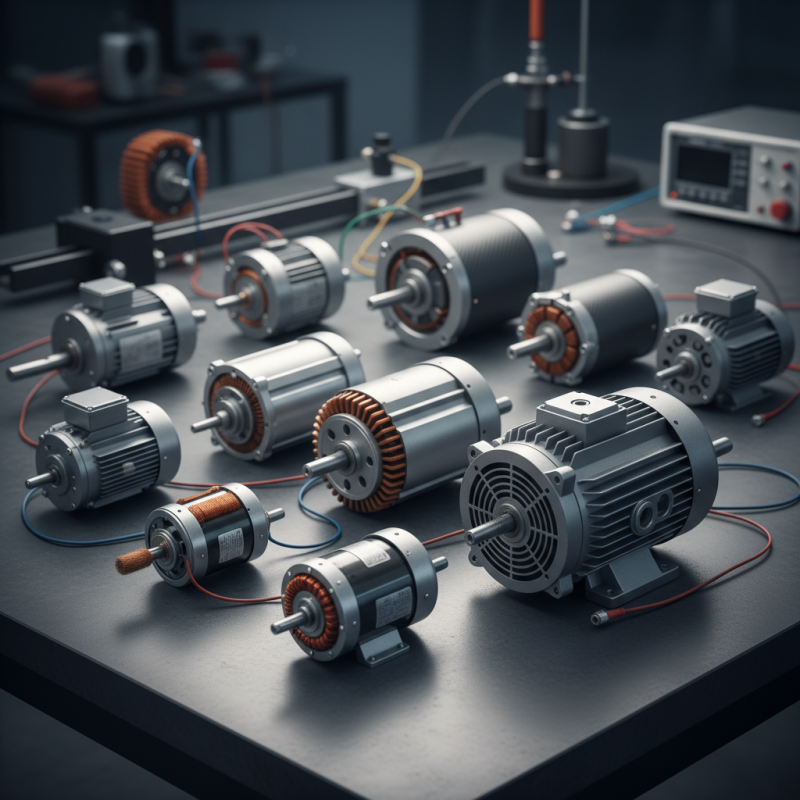
Electric motors are critical in various applications. There are several types available in the global market, each suited for different needs. Buyers must understand these differences to make informed decisions. Common types include AC and DC motors, each with unique benefits. AC motors are efficient and often used in industrial settings. DC motors, on the other hand, offer better speed control and are popular in smaller devices.
Within these categories, subtypes are also noteworthy. Induction motors operate without brushes, reducing maintenance needs. Stepper motors provide precise control in automation tasks. Brushless motors, known for longevity, are becoming more favored due to their efficiency. Each type has its advantages, but they also come with downsides. For instance, induction motors can struggle with variable speed applications.
Understanding the application is crucial. Some motors perform best under particular conditions. Electric motors can be complex, and selecting the wrong type might lead to inefficiency or higher costs. It's essential to consider the intended use, load requirements, and environmental factors. While options abound, thorough research is vital to avoid costly mistakes.
DC motors are widely recognized for their versatility and efficiency. They are prevalent in various applications, from small household gadgets to large industrial machines. According to the International Electrotechnical Commission, approximately 40% of all motors in the industrial sector are DC motors. This high usage underscores their importance across industries.
One key characteristic of DC motors is their ability to offer precise speed control. They can rapidly adjust their RPM, making them ideal for applications requiring variable speed settings. For example, in electric vehicles, DC motors allow for smooth acceleration and deceleration. Their simplicity in construction contributes to lower maintenance needs. However, the need for brushes in traditional designs can result in wear over time. This aspect raises concerns about longevity and reliability for certain high-usage applications.
While DC motors have many advantages, they also have limitations. For instance, they are less efficient at higher power levels compared to some AC motors. Additionally, they can produce electromagnetic interference, which may impact sensitive electronics nearby. Organizations relying on DC motors must consider these factors in their operational planning. Allocation of resources for maintenance and upgrades could be essential for optimizing performance in the long run.
AC induction motors are widely used due to their reliability and efficiency. They operate on the principle of electromagnetic induction. When alternating current flows through a stator, it creates a rotating magnetic field. This field induces current in the rotor, enabling it to turn. As a result, these motors are ideal for various industrial applications.
One significant benefit of AC induction motors is their durability. They have fewer moving parts compared to DC motors, leading to less wear and tear. This makes them suitable for long-term use. However, while they offer great advantages, the initial cost can be high. Maintenance, though generally low, requires attention to ensure optimal performance.
Their ability to operate in harsh environments is another benefit. AC induction motors can handle dust, moisture, and temperature fluctuations well. Nonetheless, certain designs may struggle with efficiency at lower speeds. Overall, understanding these motors helps buyers make informed choices. Each application requires careful consideration of performance needs and operating conditions.
Stepper motors are essential for applications that require high precision. They operate by moving in discrete steps, which allows for exact positioning. This feature makes them ideal for robotics, CNC machines, and 3D printers. In these contexts, precise movements significantly enhance the quality of the work.
When choosing a stepper motor, consider its torque ratings. Insufficient torque can lead to missed steps and decreased performance. Select a motor that matches your application’s requirements. It’s also crucial to pay attention to the driver specifications. A compatible driver ensures smooth operation and maximizes the motor's capabilities.
Tips: Always evaluate your project's requirements. An undersized motor can limit your design. Conversely, an oversized motor may lead to inefficiencies and increased costs. Understanding your needs helps avoid common pitfalls.
Influence of environmental conditions is another area to reflect on. Factors like temperature and humidity can impact motor performance. Ensure the selected stepper motor can operate effectively in your intended environment. This consideration is particularly important for outdoor applications.
Brushless and brushed motors have distinct features that affect their performance and suitability. Brushless motors use electronic controllers for operation. This design allows for higher efficiency and longer life spans. Their absence of brushes reduces mechanical wear, resulting in less maintenance and a quieter operation. Many industries now favor brushless motors for applications requiring durability and reliability.
Brushed motors, on the other hand, rely on physical brushes to transfer power. They are usually more cost-effective and simpler to implement. However, this design leads to greater wear over time as the brushes need occasional replacement. While they can perform well in various settings, the longevity and efficiency lag behind brushless models. Buyers should weigh the pros and cons based on specific needs.
When considering efficiency, the choice between these motors becomes clearer. Brushless motors excel in energy conservation. They produce less heat and can operate at higher speeds. Yet, the upfront cost can be higher. Brushed motors may suit short-term projects better, despite their limitations. Ultimately, understanding these differences is crucial for making informed decisions.
: DC motors are versatile and efficient, suitable for many applications. They provide precise speed control and are easy to maintain.
Traditional DC motors may have reduced longevity due to brush wear. This can lead to reliability issues, especially in high-usage scenarios.
Stepper motors move in discrete steps, providing exact positioning. This accuracy is vital for robots, CNC machines, and 3D printers.
Check torque ratings and ensure the motor meets your application’s needs. Also, use a compatible driver for optimal performance.
Conditions like temperature and humidity can affect motor efficiency and operation. Ensure your motor can work well in its intended environment.
Brushless motors are more efficient and require less maintenance. Brushed motors are cost-effective but have a shorter lifespan due to wear.
While brushless motors offer advantages like durability, they can be more expensive. Brushed motors might be better for short-term projects.
Choosing the wrong size motor can affect performance. An undersized motor may struggle, while an oversized one can waste energy.
Thoroughly assess power requirements and environmental conditions. Doing so helps avoid issues and ensures better motor compatibility.
Consider maintenance costs and potential upgrades. A strategy focused on resource allocation helps maximize performance and reliability.
The article "Top 10 Electric Motor Types for Global Buyers to Consider" provides a comprehensive overview of various electric motor types available in the market. It outlines the key characteristics and applications of DC motors, highlighting their versatility and efficiency in different environments. The discussion extends to AC induction motors, known for their reliability and low maintenance, making them appealing in industrial settings.
Furthermore, the article explores stepper motors, which offer precise control essential for applications like 3D printing and robotics. A comparative analysis of brushless and brushed motors concludes the piece, detailing their respective advantages and suitability for specific tasks. Overall, this summary equips potential buyers with essential insights to make informed decisions in selecting the right electric motor for their needs.
