
Sunvim Motor Sunvim Motor

Top High Torque Electric Motor Manufacturers for Global Buyers

Time:2026-10-17 Author:Ethan
0%

Selecting the right High Torque Electric Motor requires more than comparing catalog prices and headline torque figures. Global buyers need dependable performance across changing loads, climates, and production schedules. A motor that performs well in a clean workshop may struggle beside a hot furnace or dusty conveyor. This guide examines leading manufacturers through practical criteria, including torque density, efficiency, thermal control, bearing quality, and service support. It also considers rated speed, duty cycles, overload capacity, and compatibility with modern drives. These details often determine whether a motor delivers stable power or creates costly downtime.

Manufacturer credibility matters. Experienced suppliers should provide clear datasheets, test records, quality procedures, and traceable production information. Factory audits, customer references, and field performance can reveal more than polished marketing language. Buyers should ask how each company validates vibration, insulation, temperature rise, and continuous-load performance. Real installations matter. Still, no shortlist is perfect. Published specifications may use different testing conditions, making direct comparisons difficult. Some service promises may also depend on regional partners rather than local engineers. Careful verification remains essential. The following overview helps procurement teams compare established manufacturers with a practical, evidence-based approach. It highlights where each supplier may fit, from heavy industrial machinery and mining equipment to robotics, lifting systems, and renewable-energy applications. The goal is not to name one universal winner, but to support a confident decision backed by technical evidence, transparent communication, and realistic operating requirements.
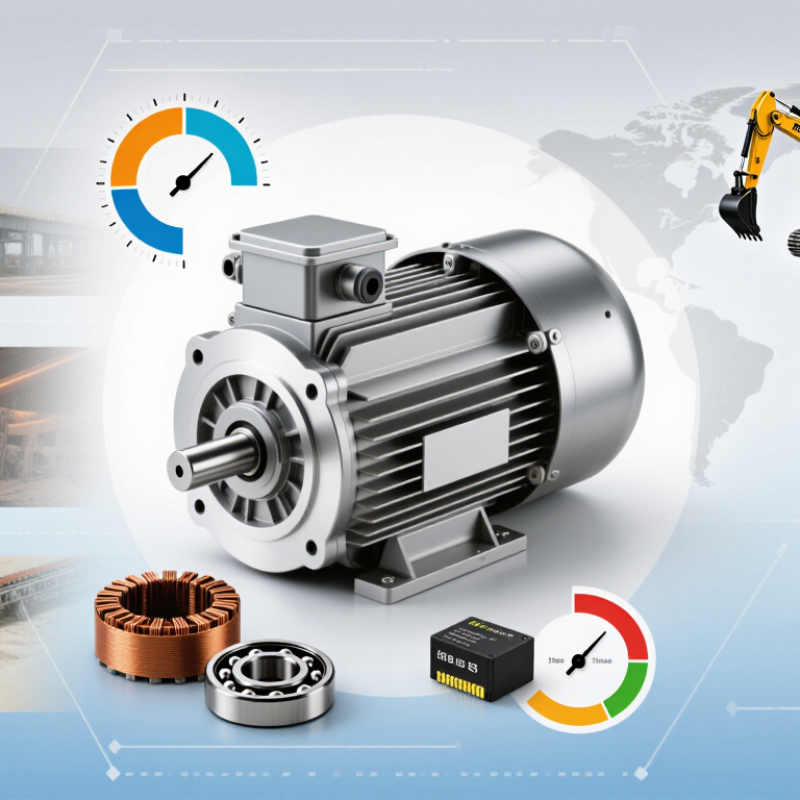
Top High Torque Electric Motor Manufacturers for Global Buyers

What High-Torque Electric Motors Are and Where They Are Used

Top High Torque Electric Motor Manufacturers for Global Buyers

What High-Torque Electric Motors Are and Where They Are Used

High-torque electric motors produce strong turning force, especially during startup or low-speed operation. Torque is measured in newton-metres and determines how effectively a motor can move a heavy load. A motor may rotate slowly yet deliver substantial force. That makes it different from a high-speed motor designed mainly for rapid rotation.

These motors support conveyors, hoists, cranes, mixers, industrial robots, agricultural machines, and automated guided vehicles. They are also useful in elevators and electric drive systems. Gear reduction can increase output torque, but it may reduce speed and efficiency. Motor selection should consider load weight, starting frequency, duty cycle, temperature, and available power. A torque rating alone can mislead. Peak torque may last only briefly, while continuous torque reflects sustained performance.

Tips: Check the actual starting load, not only the average load. Confirm whether the application needs continuous or intermittent torque. Compare rated speed with gearbox speed. Review cooling conditions, shaft dimensions, braking needs, and control compatibility. In dusty or wet workplaces, protection ratings matter greatly. Small details matter.

The term “high torque” is not used consistently across suppliers. One specification may describe peak output, while another shows continuous output. Buyers should request test conditions, efficiency data, overload limits, and maintenance requirements. A careful comparison is slower, but it prevents costly mismatches. Even experienced teams sometimes overlook acceleration time. That mistake deserves a second look.

Core Technologies Behind High-Torque Motor Performance

Top High Torque Electric Motor Manufacturers for Global Buyers

High-torque performance begins with magnetic loading and current control, not marketing labels. Motor torque follows the relationship T = kΦI, where magnetic flux and phase current work together. Strong permanent magnets can increase torque density, while carefully shaped laminations reduce saturation and iron loss. High copper fill also helps, but it creates more heat.

Thermal design is critical. According to the International Energy Agency’s Energy Efficiency 2017 analysis, motor-driven systems consume about half of global electricity. Small efficiency gains can therefore affect operating costs and emissions. Liquid cooling, enlarged housings, and optimized winding paths help maintain torque during repeated acceleration. The U.S. Department of Energy has also reported that motor systems account for roughly 70% of industrial electricity use in the United States.

Control electronics complete the system. Field-oriented control can deliver stable torque at low speed, while encoders improve position accuracy under changing loads. Bearings, shafts, and gear interfaces must withstand shock torque, not just rated torque. That distinction is often missed. A motor may advertise impressive peak output, yet overheat within minutes if cooling and duty cycle are poorly matched. Buyers should compare continuous torque, peak duration, thermal limits, efficiency maps, and test conditions. Published data is useful, but independent verification remains necessary.

Numbers can still mislead.

Leading High-Torque Electric Motor Manufacturers by Region

Top High Torque Electric Motor Manufacturers for Global Buyers

Regional strength matters when selecting a high-torque electric motor manufacturer. European producers often emphasize efficiency classes, traceability, and compliance documentation. East Asian suppliers usually offer broad production capacity and flexible customization. North American manufacturers commonly focus on industrial serviceability, controls integration, and aftermarket support. India has expanded its motor manufacturing base, especially for pumps, conveyors, and process equipment.

The International Energy Agency estimates that electric motor systems consume about 53% of global electricity. This makes efficiency more than a purchasing detail. It affects operating costs, cooling requirements, and carbon reporting. The U.S. Department of Energy also highlights motor-system optimization as a major industrial efficiency opportunity. Buyers should compare rated torque, overload capacity, duty cycle, insulation class, and tested efficiency. Catalog torque can mislead. Real performance depends on the gearbox, inverter, load profile, and ambient temperature.

Tips: Request test curves, not only brochures. Ask for vibration data at working speed. Confirm spare-part availability in your region. Independent inspection can reduce uncertainty, especially with first-time suppliers. Regional rankings are useful, but they are never perfectly clean. A smaller factory may provide stronger engineering support than a larger exporter. I have seen specifications look impressive until continuous-duty testing exposed heat buildup. Leave room for that possibility.

Top High-Torque Electric Motor Manufacturers for Global Buyers

Leading high-torque electric motor manufacturing regions by estimated share of global electric motor market activity, 2023.

Asia-Pacific represents the largest manufacturing and demand base, followed by Europe and North America. The figures are rounded regional market-share estimates for the broader electric motor industry and are intended for regional comparison rather than company-level ranking.

How Global Buyers Should Compare Motor Manufacturers

Top High Torque Electric Motor Manufacturers for Global Buyers

How Global Buyers Should Compare Motor Manufacturers

Global buyers should compare evidence, not impressive product photos. Ask each manufacturer for torque-speed curves, efficiency data, and thermal limits under your exact load. A motor producing high starting torque may overheat during repeated cycles. Check the duty profile carefully. Continuous, intermittent, and peak torque require different designs.

Request a sample motor and inspect its behavior in real conditions. Measure vibration, noise, temperature rise, and current draw after several hours. Ask whether testing uses calibrated instruments and documented procedures. This detail reveals technical discipline. Review housing materials, insulation class, ingress protection, shaft tolerances, and bearing life. Small weaknesses can become expensive failures in dusty factories or humid ports.

Reliability also depends on support beyond production. Compare lead times, spare-part availability, repair instructions, and response times from technical staff. Ask for references from applications similar to yours, not unrelated industries. Verify certifications for your destination market and confirm who handles compliance documents. Pricing deserves scrutiny too. A cheaper motor can demand stronger cooling, more maintenance, or earlier replacement. I would not trust a perfect spreadsheet alone. Real installations often expose assumptions that laboratory tests miss. Leave room for independent testing before committing to a large order.

Top High Torque Electric Motor Manufacturers for Global Buyers - How Global Buyers Should Compare Motor Manufacturers

Comparison Dimension Recognized Reference or Practical Benchmark What Global Buyers Should Compare Evidence to Request
Motor Technology Induction, permanent-magnet synchronous, brushless DC, or servo motor technology. Compare continuous torque, peak torque, overload capability, controllability, maintenance needs, and total cost of ownership. Motor datasheet, torque-speed curve, controller compatibility statement, and application references.
Rated Torque Rated torque can be calculated as T = 9550 × P ÷ n, where T is N·m, P is kW, and n is r/min. Check whether the quoted torque is continuous, intermittent, or peak torque and confirm the operating speed at that torque. Signed performance curve showing torque, speed, current, and temperature conditions.
Power and Speed Range Industrial motors may be supplied for low-voltage systems up to approximately 690 V AC, with 50 Hz or 60 Hz operation depending on the market. Compare rated power, base speed, overspeed capability, constant-torque range, and field-weakening performance. Nameplate data, voltage-frequency chart, speed range, and drive operating limits.
Energy Efficiency IE efficiency classes are defined for applicable motors under IEC 60034-30-1; IE3 and IE4 are commonly evaluated for industrial projects. Compare efficiency at the actual load point rather than relying only on the maximum rated efficiency. Efficiency test report, declared IE class, part-load efficiency data, and applicable local compliance documents.
Duty Rating S1 represents continuous running duty at a constant load under steady thermal conditions according to IEC 60034-1. Verify whether the application requires S1, intermittent duty, frequent starts, reversing, or high short-term overload. Duty-cycle calculation, thermal model, start-per-hour limit, and allowable overload duration.
Enclosure and Ingress Protection IP55 is a common industrial enclosure level; the required IP rating depends on dust, water, washdown, and installation conditions. Compare protection against solid particles, water jets, corrosive environments, and temporary immersion where relevant. IEC 60529 test documentation, enclosure drawing, drain-plug details, and corrosion-protection specification.
Insulation System Class F insulation is widely used in industrial motors; the permitted temperature rise must be checked separately from the insulation class. For variable-frequency-drive applications, compare inverter-duty insulation, winding protection, and bearing-current mitigation. Insulation-class declaration, surge-test method, partial-discharge information where applicable, and VFD suitability statement.
Operating Environment A common reference condition for standard motor ratings is approximately −20°C to +40°C ambient temperature, subject to the design and standard used. Check altitude, humidity, dust, salt exposure, hazardous-area requirements, cooling airflow, and derating above reference conditions. Derating curves, environmental test records, coating specification, and hazardous-area certificates when required.
Mechanical Interface Mounting dimensions and shaft details should follow the applicable IEC or NEMA dimensional framework. Compare frame size, mounting arrangement, shaft extension, flange dimensions, keyway, bearing arrangement, and allowable radial load. Dimension drawing, tolerance table, shaft-load calculation, and interchangeability confirmation.
Quality and Testing Routine tests commonly include winding resistance, insulation resistance, no-load operation, and performance verification as applicable. Compare traceability, calibration control, final inspection, balance grade, vibration limits, and documentation completeness. Quality plan, inspection and test plan, calibration certificates, sample test report, and serial-number traceability.
Global Compliance IEC 60034 is widely used internationally; North American projects may additionally require NEMA dimensions, certification, or local energy compliance. Confirm that the motor documentation matches the destination country, voltage system, safety rules, and import requirements. Declaration of conformity, certificates, country-specific markings, technical file, and customs documentation.
Lead Time and Supply Continuity Lead time varies by standardization, power rating, customization, production capacity, and shipping route. Compare quoted production time, spare-parts availability, minimum order quantity, packaging, and contingency planning. Written delivery schedule, capacity statement, approved spare-parts list, packaging specification, and logistics plan.
Warranty and Lifecycle Support Warranty terms differ by supplier and application; service responsibility should be defined before purchase. Compare warranty duration, exclusions, remote troubleshooting, repair capability, replacement policy, and technical response time. Warranty document, service-level agreement, maintenance instructions, spare-parts pricing, and escalation contacts.

Buyer note: Final motor selection should be verified against the complete load profile, duty cycle, drive system, installation environment, applicable standards, and local regulatory requirements.

Quality, Certification, and Support Factors for International Purchasing

High-torque electric motors demand more than impressive starting force. International buyers should examine tested output, thermal performance, efficiency, and duty-cycle stability. The International Energy Agency reports that motor-driven systems consume more than half of global electricity. Small efficiency differences can therefore create substantial operating costs.

Quality evidence begins with traceable test records. Ask for load curves, temperature-rise results, insulation ratings, and vibration measurements. IEC 60034 standards provide a useful technical framework for rotating electrical machines. However, a certificate alone is not proof. Confirm the issuing body, test scope, production date, and whether the delivered motor matches the tested model. This step is often missed.

Certification must fit the destination market and installation environment. Check electrical safety, electromagnetic compatibility, hazardous-area requirements, and documentation language before ordering. ISO 9001 registration can indicate controlled processes, but it does not guarantee every motor is defect-free. The U.S. Department of Energy has repeatedly emphasized the value of efficient motor systems, especially where motors operate continuously. Buyers should request realistic service data, not only laboratory figures.

Support is equally practical. A reliable supplier should provide wiring diagrams, spare-part references, commissioning guidance, and response times in writing. Keep one sample motor under observation during factory acceptance testing. Record bearing noise, shaft temperature, and current balance. Real installations are less tidy than brochures suggest. That is where weak assumptions become expensive.

FAQS

What is a high-torque electric motor?

It produces strong turning force during startup or low-speed operation. Torque is measured in newton-metres. A slow motor can still move heavy loads.

Where are high-torque motors commonly used?

Common uses include conveyors, hoists, cranes, mixers, robots, and agricultural machines. They also support elevators and automated guided vehicles. Some systems need immediate force.

Is peak torque the same as continuous torque?

No. Peak torque may last briefly during acceleration. Continuous torque describes sustained operation. Confusing them can cause overheating or weak performance.

How can buyers choose the correct motor?

Check load weight, starting frequency, duty cycle, temperature, and available power. Review shaft size, cooling, braking, and control compatibility. Small details matter.

Can a gearbox increase motor torque?

Yes, gear reduction can increase output torque. However, it usually reduces speed and may lower efficiency. Match the gearbox speed with the motor rating.

Why can catalog torque ratings be misleading?

Suppliers may list peak output, continuous output, or different test conditions. Ask for torque curves, efficiency data, and overload limits. A brochure is not enough.

What environmental conditions should buyers examine?

Dusty or wet workplaces require suitable protection ratings. Ambient temperature also affects performance and cooling. Vibration data at working speed can reveal hidden problems.

How does motor efficiency affect operating costs?

Motor systems consume substantial electricity across industry. Better efficiency can reduce energy costs, cooling demand, and reported emissions. The purchase price is only part of the calculation.

Should regional manufacturing location decide the purchase?

Location can influence customization, documentation, controls integration, and service support. Confirm spare-part availability nearby. A smaller factory may offer stronger engineering help.

What testing should buyers request before ordering?

Request test conditions, efficiency curves, vibration data, and maintenance requirements. Independent inspection can reduce uncertainty. Continuous-duty testing deserves another look.

Conclusion

High Torque Electric Motor systems are designed to deliver strong rotational force in demanding applications where conventional motors may struggle. They are widely used in industrial machinery, automation equipment, conveyors, robotics, electric vehicles, agricultural systems, and energy infrastructure. Their performance depends on technologies such as optimized electromagnetic design, high-strength materials, efficient cooling, precision manufacturing, advanced control systems, and durable bearings. Together, these features improve starting power, operating stability, energy efficiency, and service life.

For global buyers, comparing manufacturers requires more than reviewing rated torque or price. Buyers should evaluate production capabilities, customization options, testing procedures, delivery reliability, and experience serving international markets. Quality management, electrical safety certification, environmental compliance, warranty terms, technical documentation, spare-parts availability, and responsive after-sales support are also essential. A reliable supplier should clearly communicate motor specifications, operating limits, installation requirements, and maintenance recommendations. By assessing both technical performance and long-term service capabilities, purchasers can select a high-torque motor solution that matches their application, budget, and international procurement requirements.

Ethan

Ethan

Ethan is a seasoned marketing professional with a deep expertise in our company's innovative product line. With a passion for sharing knowledge and insights, he takes the lead in regularly updating our corporate blog, where he explores industry trends, product features, and effective marketing......