
Sunvim Motor
Industrial motors play a crucial role in the efficiency of various industrial applications. According to a report by MarketsandMarkets, the global industrial motor market is projected to reach USD 167 billion by 2025, growing at a CAGR of 6.5% from 2020. This significant growth emphasizes the demand for reliable and efficient motors in the competitive industrial landscape.
However, not all industrial motors are created equal. The choice of the right motor impacts operational efficiency, energy consumption, and overall cost. For example, energy-efficient motors can reduce energy use by 2-8% depending on the application. These savings are essential, as energy costs can account for nearly 25% of total operational expenses in manufacturing sectors.
Despite advancements, many organizations still overlook the importance of selecting high-quality industrial motors. There is a tendency to prioritize initial costs over long-term savings. This short-sighted approach can lead to increased maintenance costs and downtime. A 2021 study revealed that companies rarely conduct thorough evaluations of their motor systems. Reflecting on these choices can reveal areas for improvement in performance and cost-effectiveness.
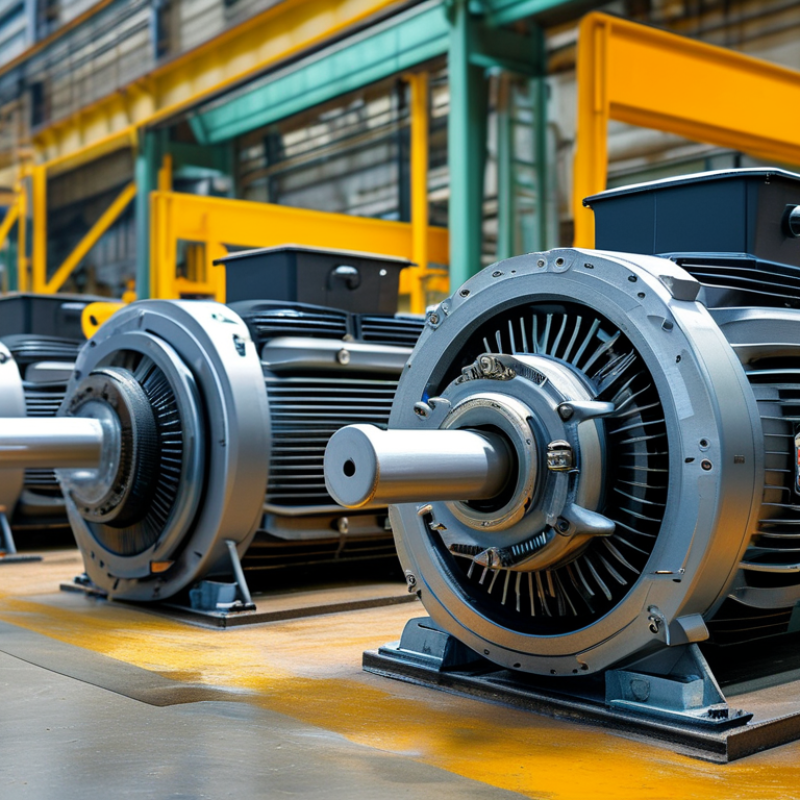
When evaluating industrial motors, understanding their types and classifications is essential. The two main categories are AC and DC motors. AC motors are known for their efficiency and longevity. These motors can be further classified into synchronous and asynchronous types. DC motors, on the other hand, are widely used for their speed control capabilities. According to a recent industry report, AC motors account for nearly 70% of the global market share.
Choosing the right motor involves considering specific application requirements. For instance, torque, speed, and energy consumption play significant roles in decision-making. A study indicates that optimized motor systems can improve energy efficiency by up to 30%. Therefore, the right selection can lead to substantial cost savings over time.
Tip: Regular maintenance of industrial motors enhances their lifespan and performance. Ensuring proper lubrication and vibration monitoring can prevent costly breakdowns. Consider using predictive maintenance techniques to identify issues before they escalate, saving time and resources in the long term. Efficient performance often comes from being proactive rather than reactive.
When selecting industrial motors, efficiency is crucial. One key factor is the motor's design. Motors come in various designs, each suited for specific applications. Knowing the right design can significantly enhance performance and energy savings.
Another important aspect is load requirements. Motors need to match the application load precisely. Oversized motors waste energy and increase costs. Undersized motors may overheat and wear out quickly. Understanding these requirements helps in choosing the right motor.
The operating environment also plays a role. Dust, humidity, and temperature can affect performance. An unsuitable environment might require a more robust motor. Thus, it's essential to assess the conditions in which the motor will operate. Every factor contributes to overall efficiency and cost savings.
In the quest for cost-effective solutions, industrial motors play a crucial role. An efficient motor can significantly impact operational costs, contributing to overall financial health. According to a recent report by the International Energy Agency, motors account for about 70% of industrial electrical consumption. This staggering figure underscores the importance of selecting the right motor to balance performance and budget.
The challenge lies in striking a balance. Higher efficiency motors often come with a steeper initial investment. However, they can lead to savings of up to 30% in energy costs over time. For example, a well-suited motor can provide necessary torque without unnecessary energy expenditure. Transitioning to high-efficiency alternatives might seem daunting, yet thinking long-term can yield substantial savings.
Additionally, maintenance and operational effectiveness influence overall costs. Many facilities overlook the cost of downtime due to underperforming motors. A report from the U.S. Department of Energy highlighted that inefficient motors can lead to unplanned outages. Such disruptions can be costly and often stem from the initial choice of motor. Focusing solely on upfront costs can lead to regrettable long-term consequences. Rethinking motor selection is essential for enhancing performance and ensuring cost savings.
The advancements in industrial motor technology have significantly transformed the manufacturing landscape. New designs focus on enhancing energy efficiency and reducing operational costs. Innovative materials and smarter control algorithms are now commonplace, leading to better performance in various applications. Enhanced cooling systems and superior insulation techniques help these motors operate at lower temperatures, which directly improves their lifespan.
One challenge remains: the integration of these innovations into existing systems. Sometimes, older equipment cannot efficiently support new motor technologies. Upgrading can be costly, yet the potential savings in energy and maintenance might justify the investment. The balance between initial expense and long-term savings is not always clear-cut. Companies must carefully evaluate these factors when considering improvements.
Furthermore, training personnel on new technologies is often overlooked. Proper training ensures that workers optimize the potential of these innovative motors. Addressing these gaps is crucial for reaping the full benefits of advanced industrial motors. Embracing these innovations is a step toward sustainable practices. However, it requires both commitment and thoughtful implementation to achieve the desired outcomes.
| Motor Type | Power Rating (HP) | Efficiency (%) | Cost ($) | Application |
|---|---|---|---|---|
| AC Induction Motor | 5 | 90 | 800 | Pumps |
| Brushless DC Motor | 10 | 92 | 1200 | Conveyors |
| Synchronous Motor | 15 | 95 | 1500 | Fans |
| Stepper Motor | 2 | 85 | 400 | Robotics |
| Universal Motor | 3 | 80 | 300 | Home Appliances |
The evolution of industrial motors is shaping the future of manufacturing. Recently, energy efficiency has become a priority. Companies seek motors that reduce energy consumption while boosting performance. This shift not only cuts costs but also lessens environmental impact.
Technological advancements play a crucial role in this change. For instance, smart sensors and AI-driven controls enhance motor performance. However, not all manufacturers adapt quickly. Some cling to outdated technologies, missing opportunities for improvement. This creates a disparity in industry competitiveness.
The demand for sustainable solutions continues to rise. Many industries are re-evaluating their motor choices. They are looking for innovative designs that can support diverse applications. Yet, reliable data on long-term performance is still scarce. Companies must remain cautious as they explore new options. Balancing innovation with proven reliability is essential for future success in the sector.
: The two main categories are AC motors and DC motors.
AC motors are known for their efficiency and longevity, accounting for a large market share.
AC motors are classified as synchronous and asynchronous types.
DC motors offer speed control capabilities, making them suitable for various applications.
Proper motor selection can save up to 30% in energy efficiency, leading to significant cost reductions.
Regular lubrication and monitoring vibration can enhance motor lifespan and performance.
Energy efficiency is becoming a priority, pushing companies to seek innovations in motor technology.
Smart sensors and AI-driven controls can enhance the performance of industrial motors significantly.
Companies must balance innovative designs with proven reliability and consider long-term performance data.
Some manufacturers cling to outdated technologies and miss out on opportunities for improvement.
Industrial motors play a crucial role in various industries, and understanding their types and classifications is essential for optimal application. Efficiency in selecting industrial motors is influenced by key factors such as power requirements, environmental conditions, and operational demands. Balancing performance with budget constraints is vital, prompting a focus on cost-effective solutions that do not sacrifice quality.
Recent innovations in industrial motors have further enhanced their efficiency while significantly reducing operational costs. Advancements such as improved materials and smart technologies are paving the way for more sustainable practices in the industrial sector. As we look to the future, the evolution of industrial motors is set to impact industries profoundly, driving efficiency and cost savings that align with modern economic needs and environmental standards.
